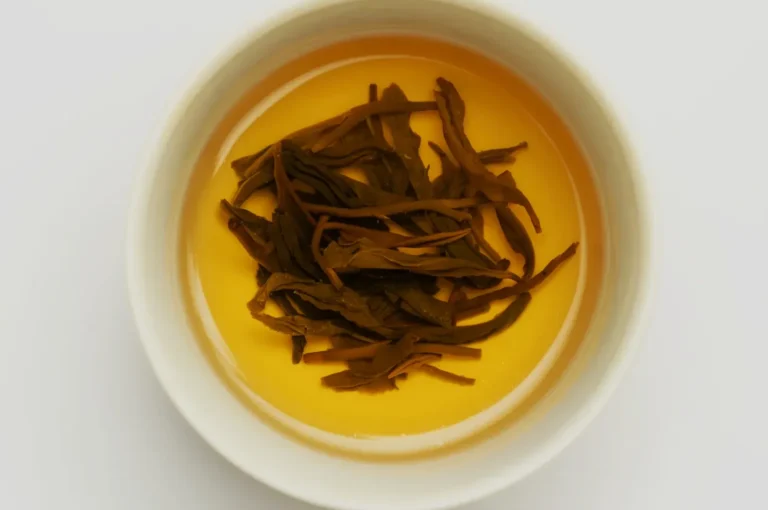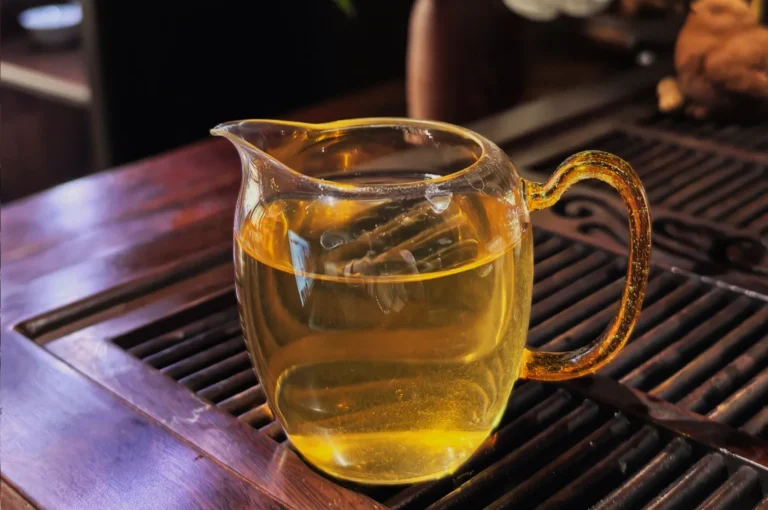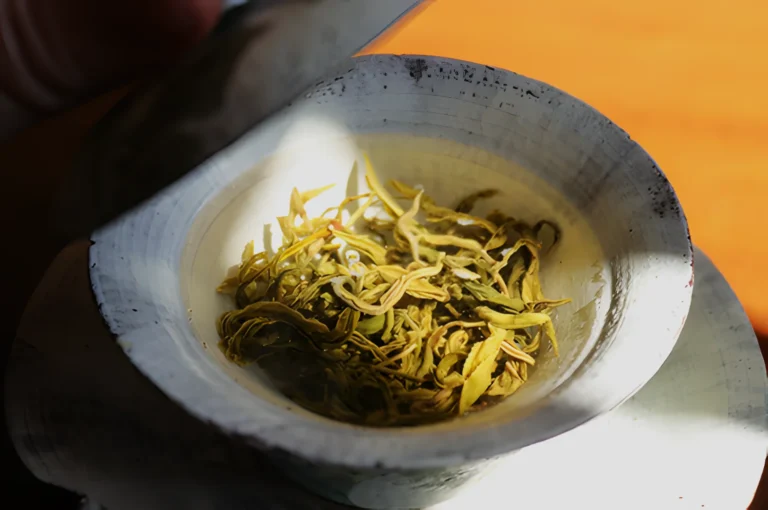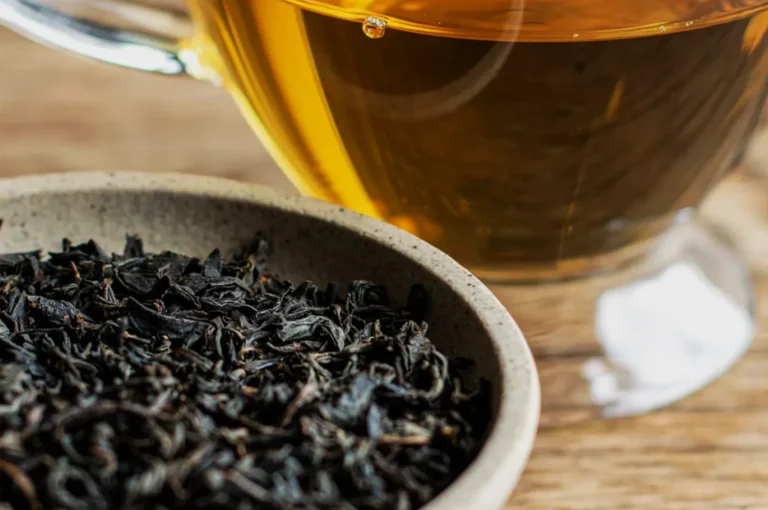
Yellow tea is often explained as “a little like green tea.”
Useful at first. Insufficient after that.
Yellow tea, or huang cha, is its own Chinese tea category, shaped by an additional processing stage that changes the leaf after fixation.
The important difference is not that yellow tea looks yellower. It is that the maker deliberately lets the leaf move somewhere green tea does not.
For the wider overview, our yellow tea guide covers taste, famous styles, benefits and brewing.
Yellow Tea Is One of China’s Six Tea Categories
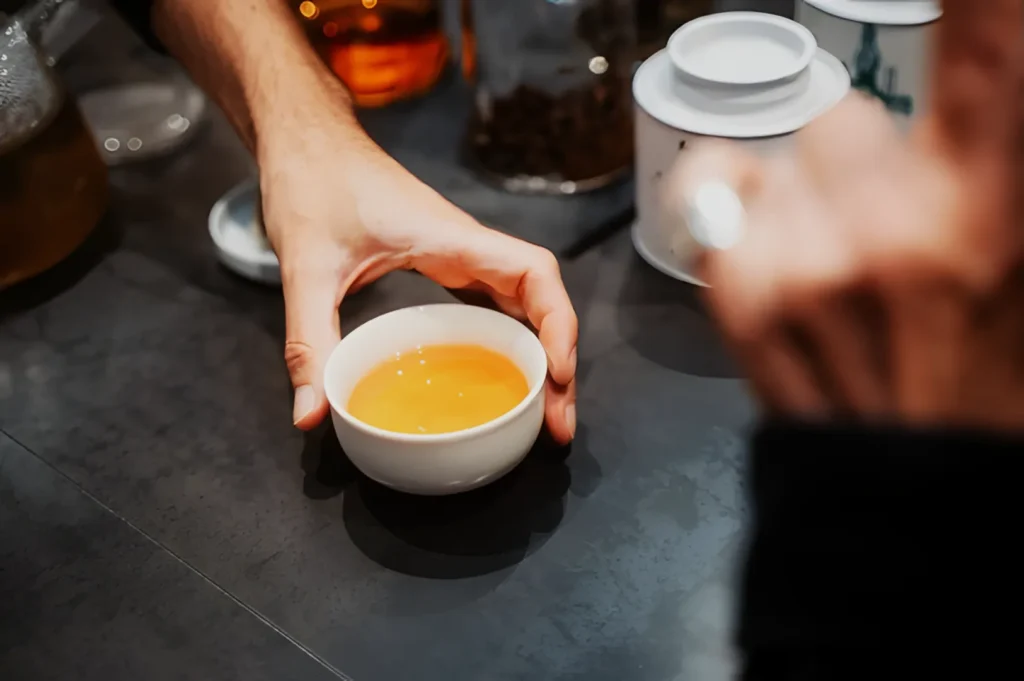
Yellow tea sits alongside green, white, oolong, black and dark tea in China’s traditional classification.
UNESCO formally includes yellow tea among the six categories within China’s traditional tea-processing heritage.
It is made from Camellia sinensis, just like the other true teas.
The difference comes from processing.
What Makes Yellow Tea Yellow?
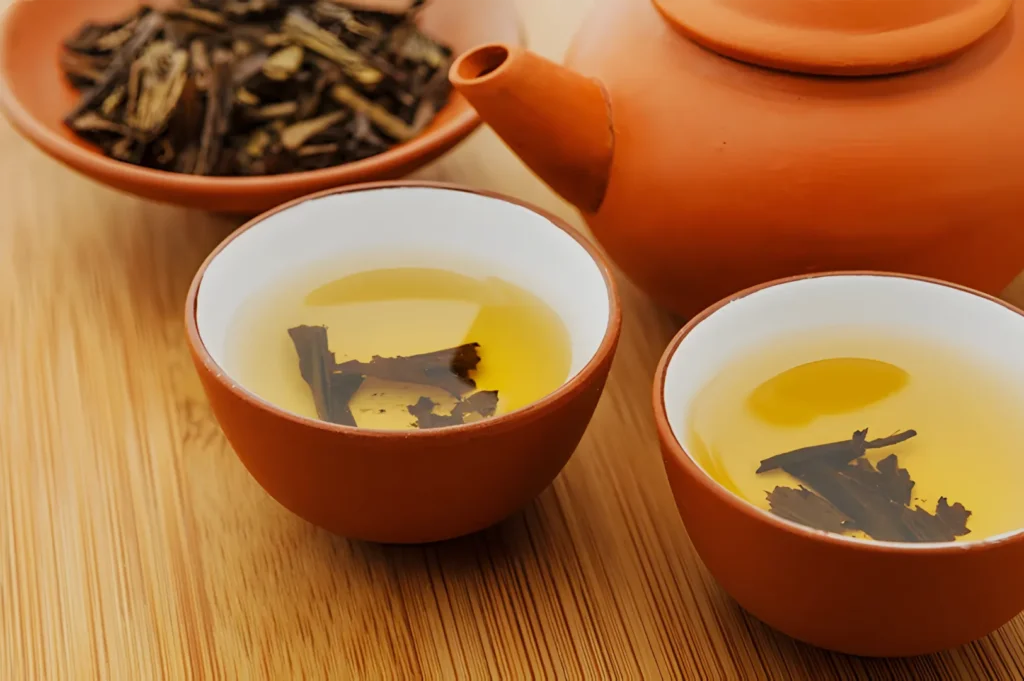
After initial steps similar to green tea production, yellow tea goes through menhuang.
The leaves are exposed to controlled warmth and moisture, allowing further changes in colour, aroma and chemistry.
A review of yellow tea describes this as “sealed yellowing,” the key procedure distinguishing it from green tea.
The process softens some of the greener character while encouraging mellower flavours.
Is Yellow Tea Fermented?
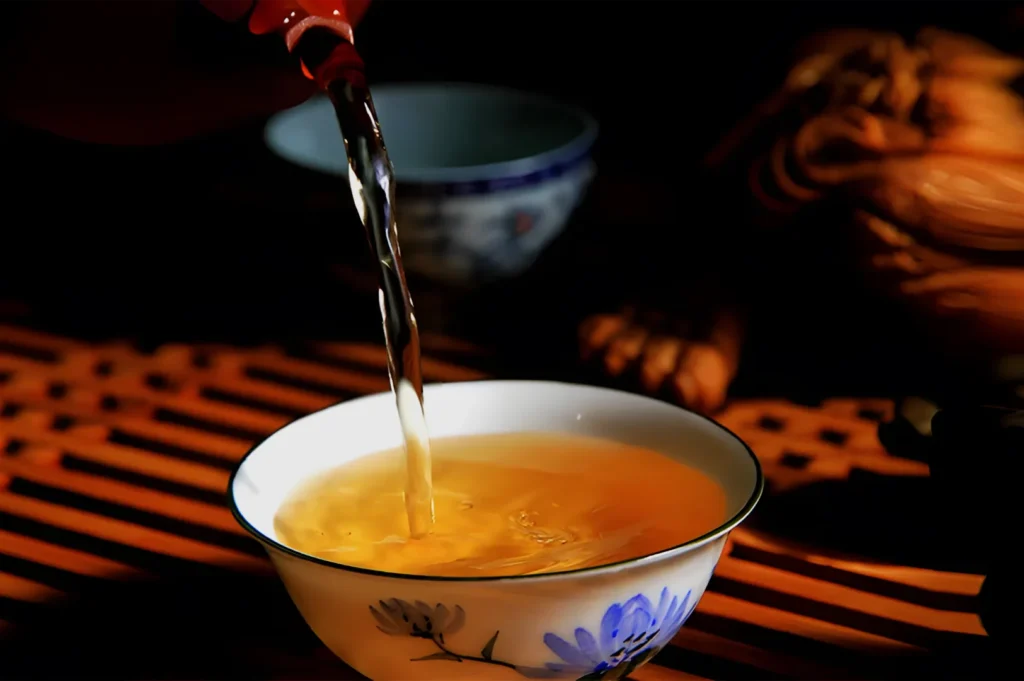
You may see yellow tea described as lightly fermented.
The terminology can be confusing.
Menhuang involves chemical changes under warm, humid conditions, but it is not the same process as microbial post-fermentation in dark tea.
A review describes yellowing as the central step shaping the tea’s sensory qualities, chemical components and bioactivities.
For the drinker, the practical lesson is easier:
yellow tea has been intentionally processed beyond green tea’s stopping point.
Why Is Yellow Tea Rare?
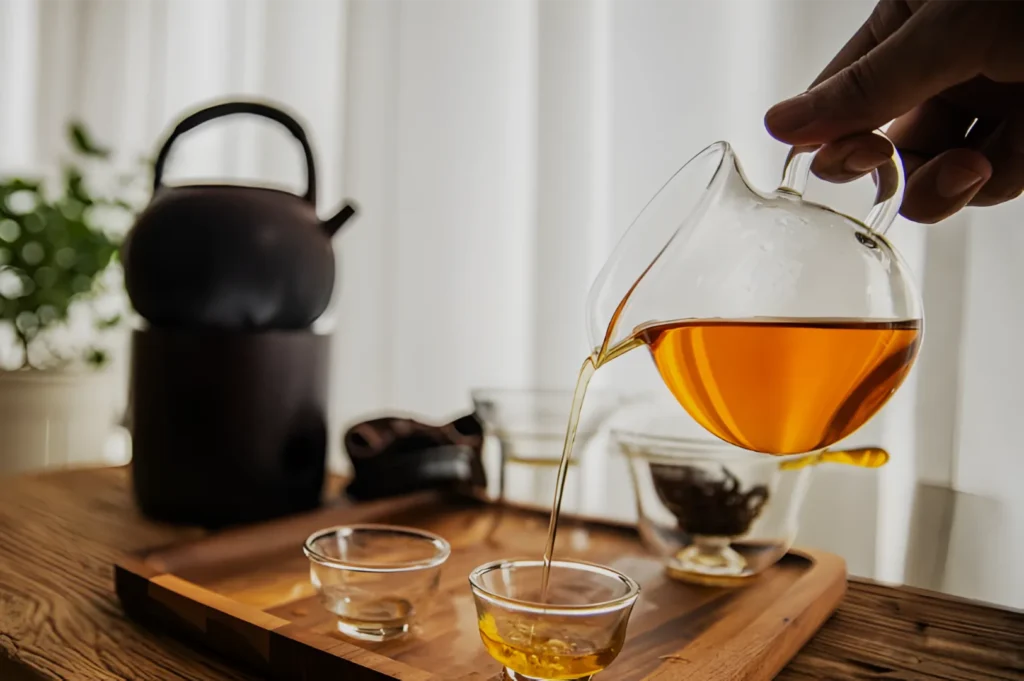
Its production can be demanding.
Menhuang requires judgement. Too little and the tea may remain harsh or overly green. Too much and freshness can be lost.
Yellow tea also occupies a smaller market than green, black or oolong tea.
That rarity should not be romanticised into automatic superiority.
Rare tea still has to taste good.
What Does Huang Cha Taste Like?
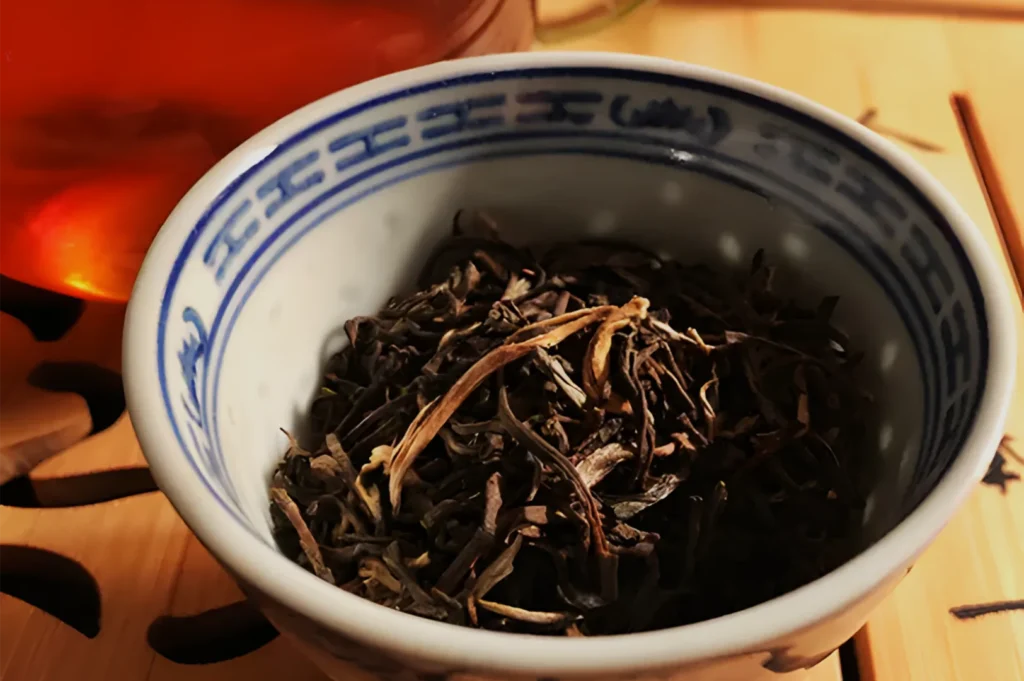
Expect variation.
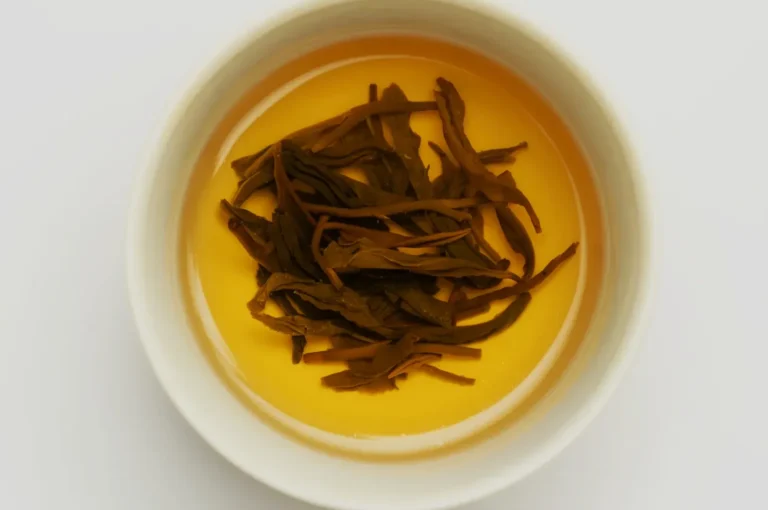
Fine bud teas can feel sweet, soft and lightly floral.
Other yellow teas may suggest corn, chestnut, warm grain or gentle roast.
The common thread is often mellowness.
At Chinese tea Singapore at Tea Room by Ki-setsu, we approach rare tea through this kind of processing context. We may not serve every category discussed in our journal, but understanding how a maker changes the leaf is central to appreciating the high-end teas we do curate.
Final Thought
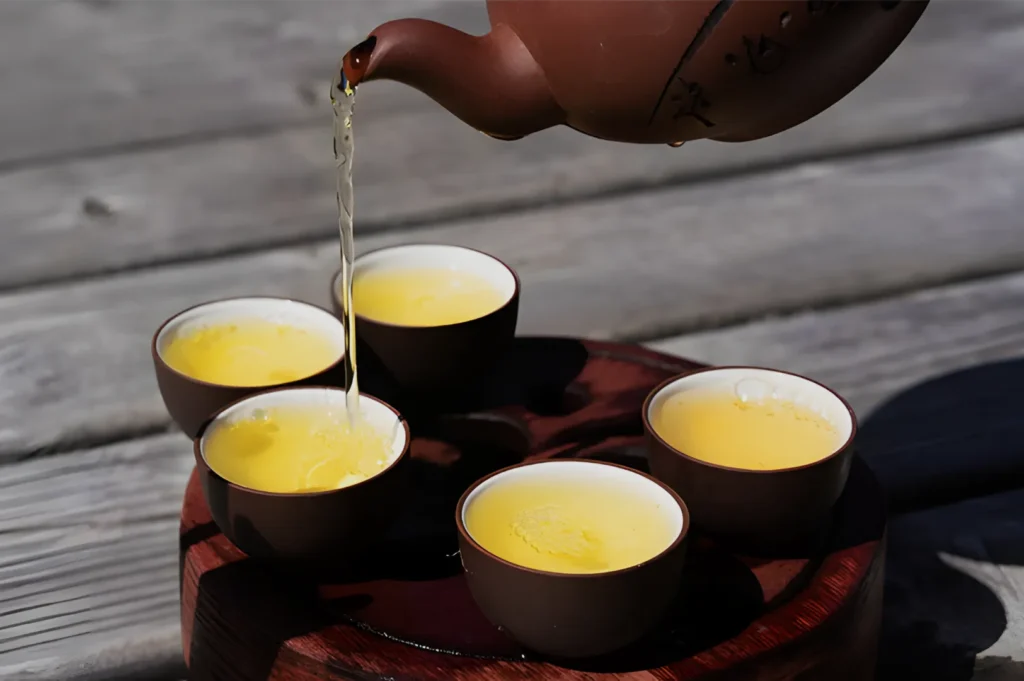
So, what is yellow tea?
It is not old green tea. It is not tea that happened to turn yellow.
It is huang cha, a distinct Chinese tea category shaped by deliberate yellowing.
Its identity begins where green tea processing chooses not to go.