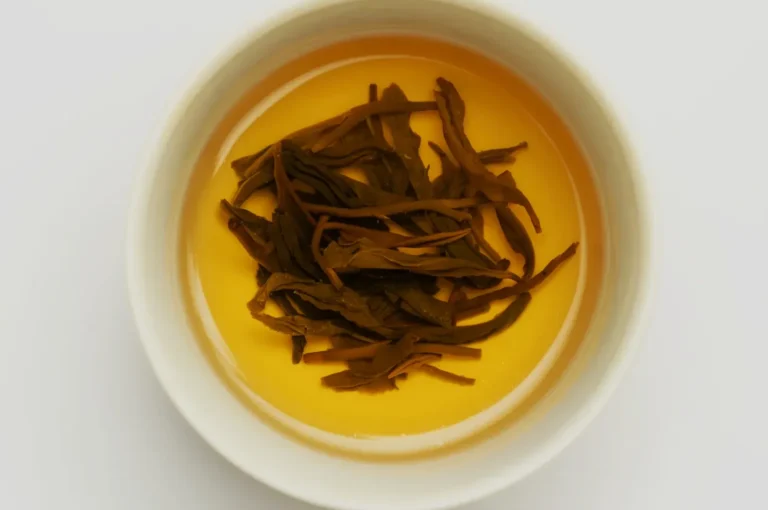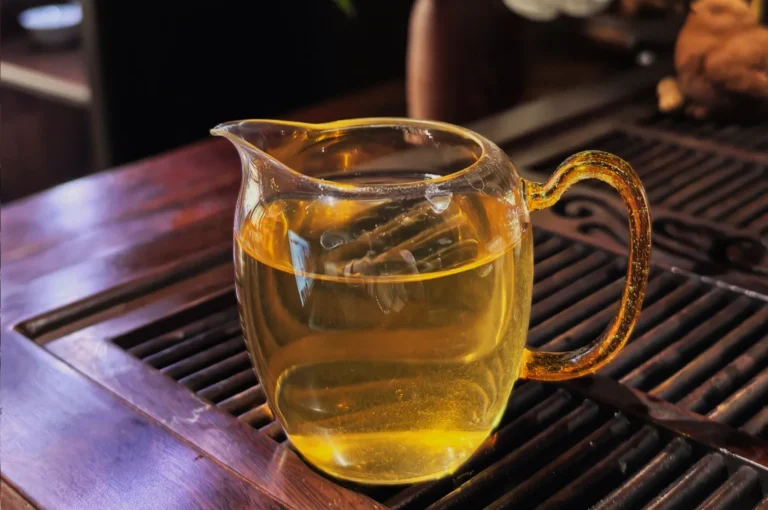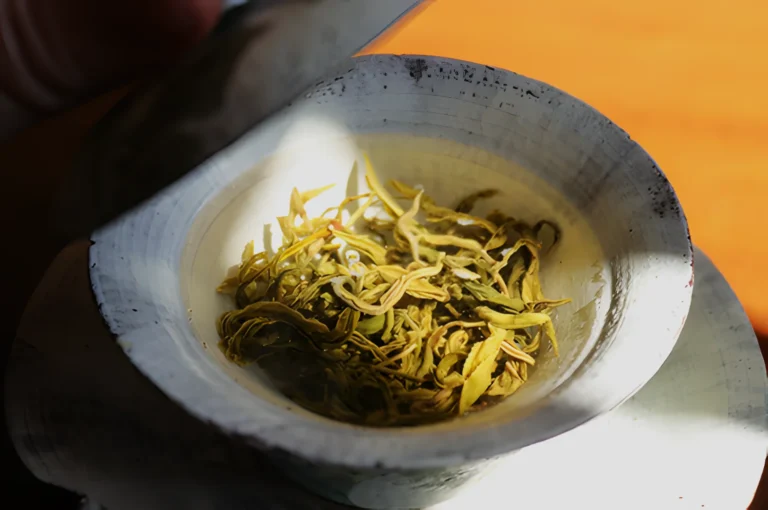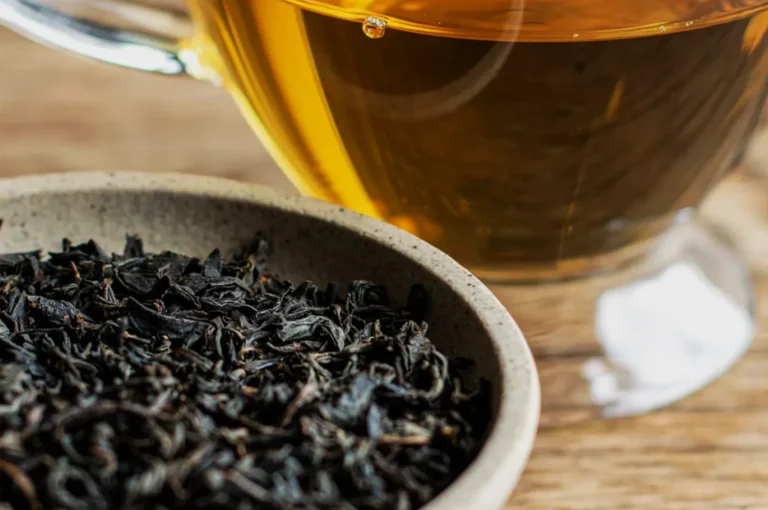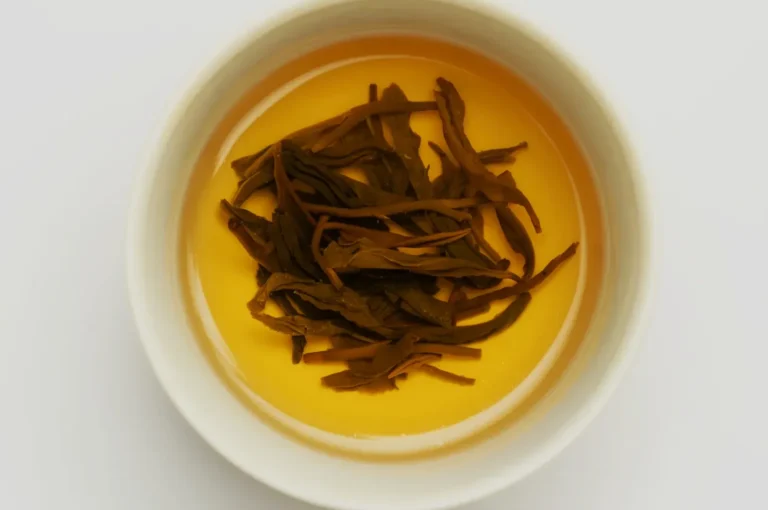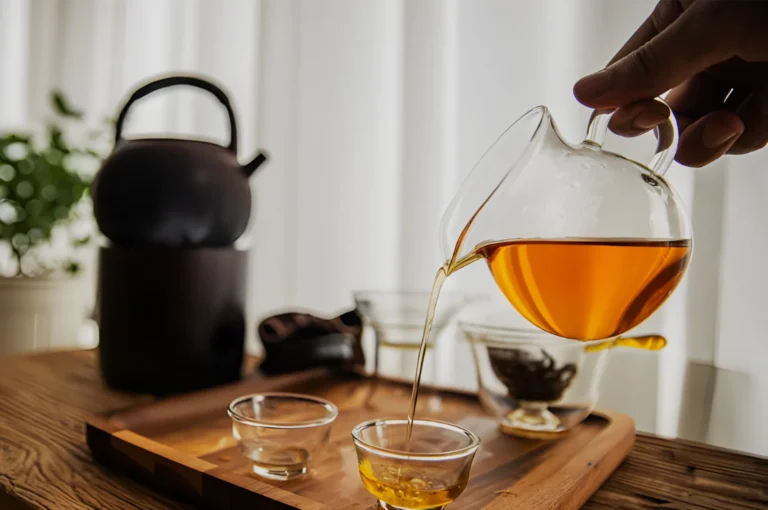
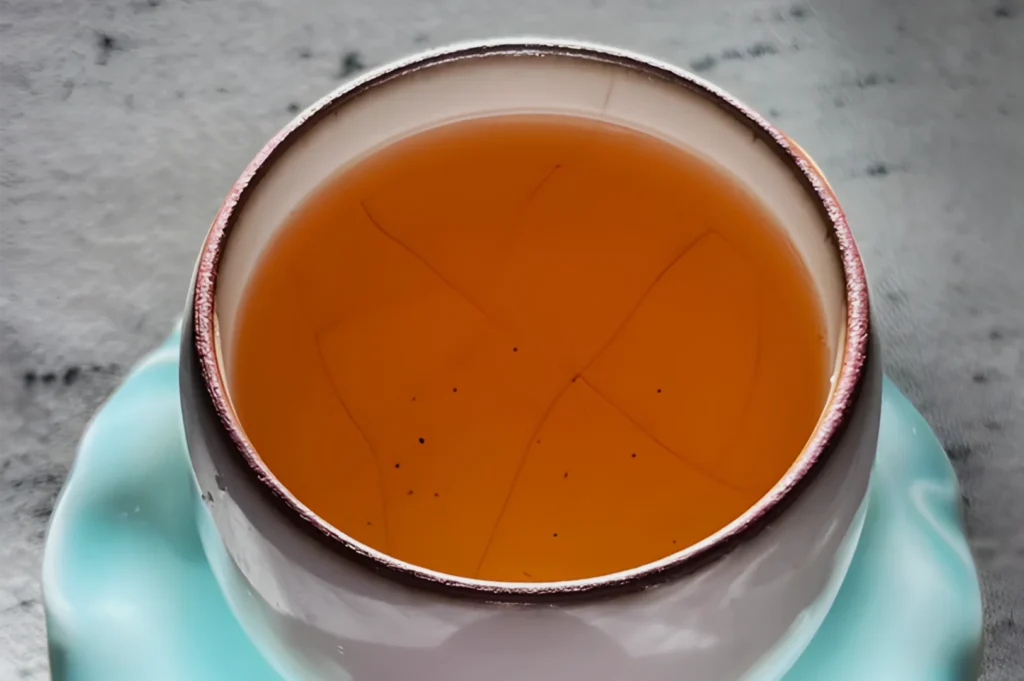
“Mellow” is one of those tea words that can mean almost nothing if we use it lazily.
Yellow tea deserves better.
Its softness is not emptiness. A good cup can carry sweetness, warm grain, chestnut, corn, flowers or gentle fruit while still remaining restrained.
Yellow tea is interesting because flavour arrives without sharp edges demanding attention first.
Our yellow tea taste and style guide provides the full category background. Here, we stay with what happens on the tongue and nose.
Sweetness Is Often Central
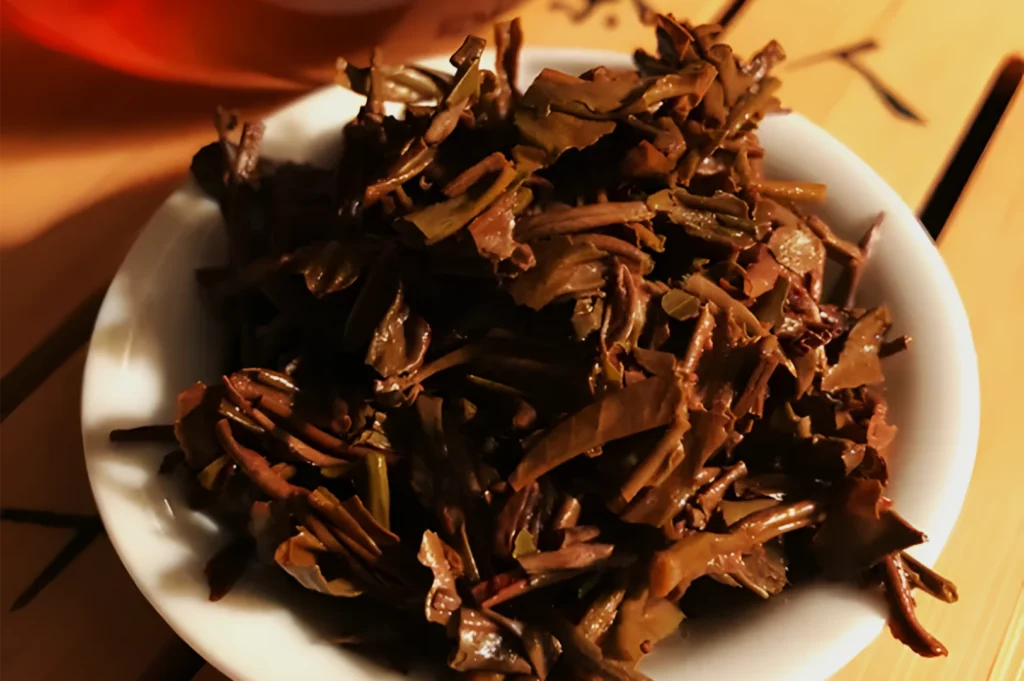
Research comparing green and yellow tea processing found that yellowing was particularly important in shaping sweetness.
This does not mean yellow tea tastes sugary.
The sweetness is often quieter: a soft returning sensation after swallowing, or a rounded quality that reduces the impression of harshness.
Bud Teas Can Feel Delicate
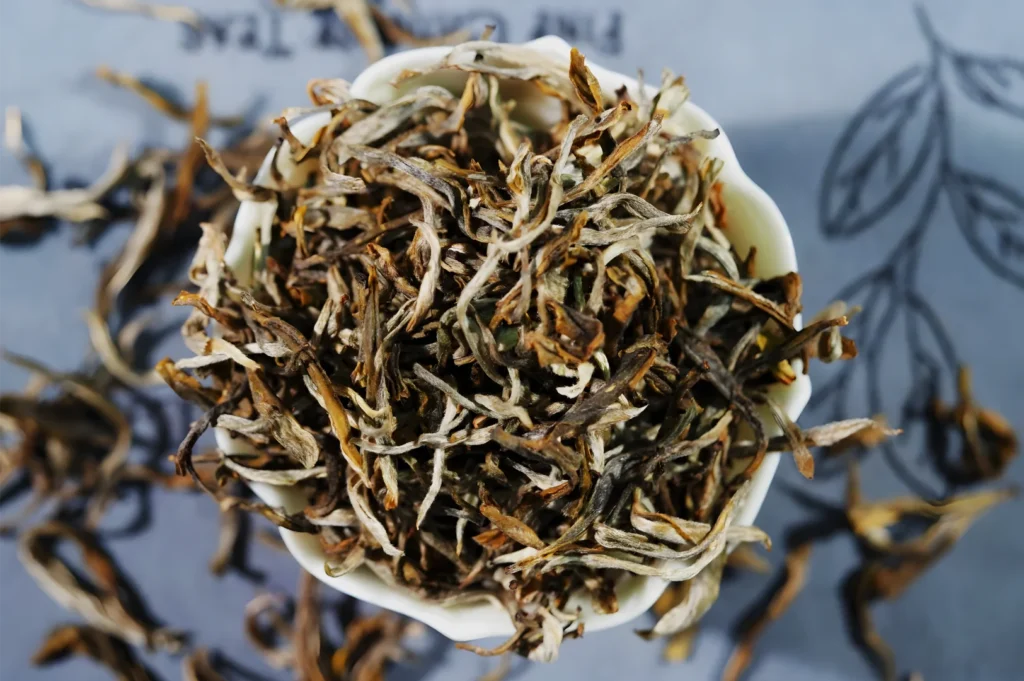
Yellow teas made primarily from buds tend toward refinement.
They may feel:
- fresh
- lightly sweet
- softly floral
- gently vegetal
- clean in the finish
The body may be subtle rather than powerful.
This is where a hurried drinker can mistake delicacy for weakness.
Larger-Leaf Yellow Tea Can Be Quite Different
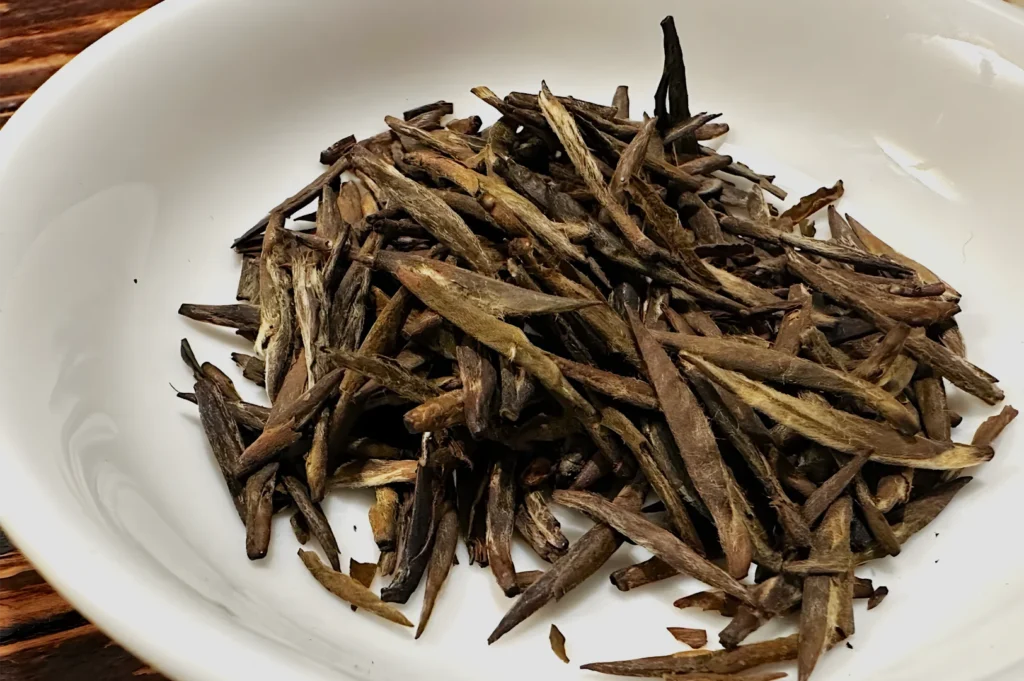
Large-leaf styles may carry more roast.
An aroma research found that roasting in large-leaf yellow tea generates pyrazines and can substantially shape the finished aromatic profile.
This can create warmer impressions of grain, toast or roasted food.
Yellow tea is therefore broader than “delicate yellow buds.”
Corn, Chestnut and Sweet Aromas
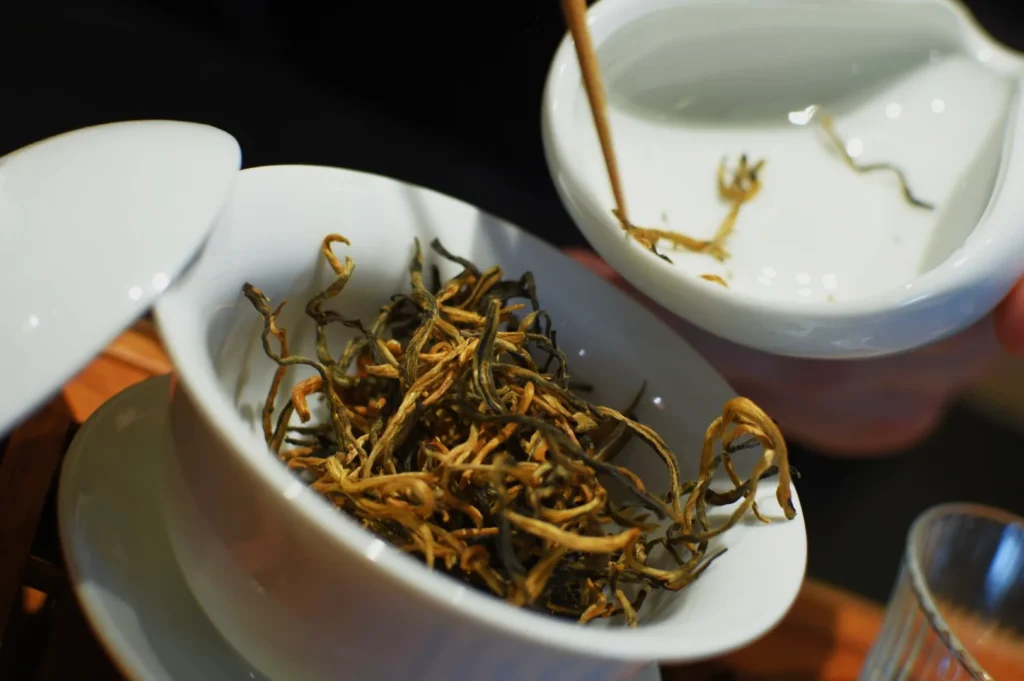
A study examining yellowing under different environmental conditions identified sensory attributes including corn fragrance, chestnut-like aroma, mellowness and bitterness.
Different processes push these qualities in different directions.
Another study described yellow tea as combining freshness with mellow sweetness and linked these qualities directly to menhuang.
What Should Good Yellow Tea Not Taste Like?
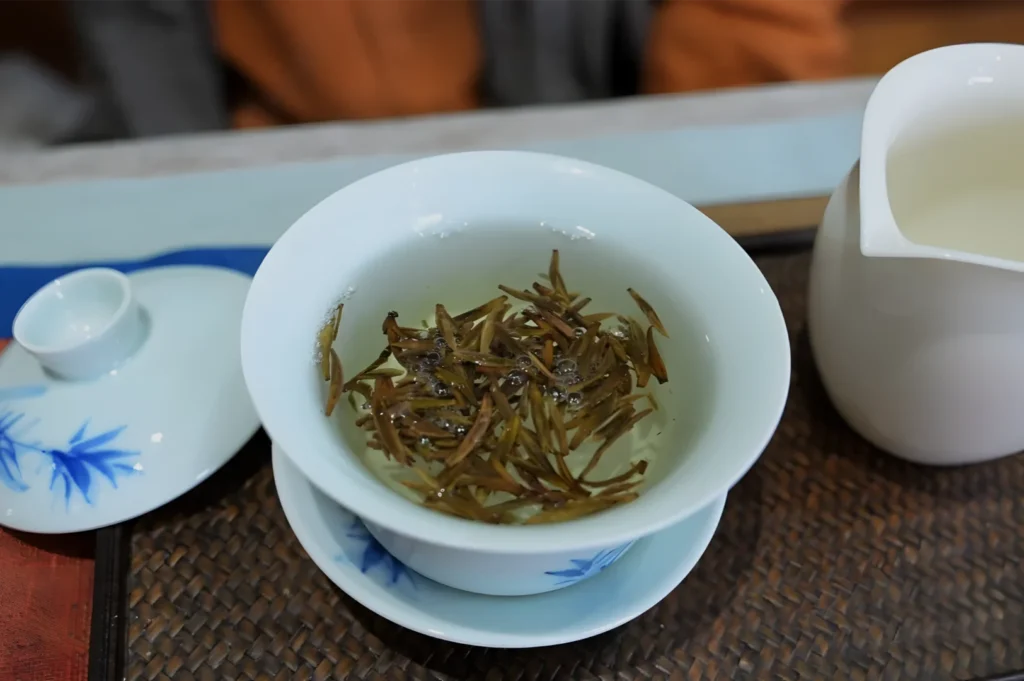
Mellow should not mean stale.
Watch for tea that feels flat, musty or lifeless.
A good yellow tea should retain enough freshness and structure to feel deliberate.
Softness should have shape.
How We Read a Quiet Tea
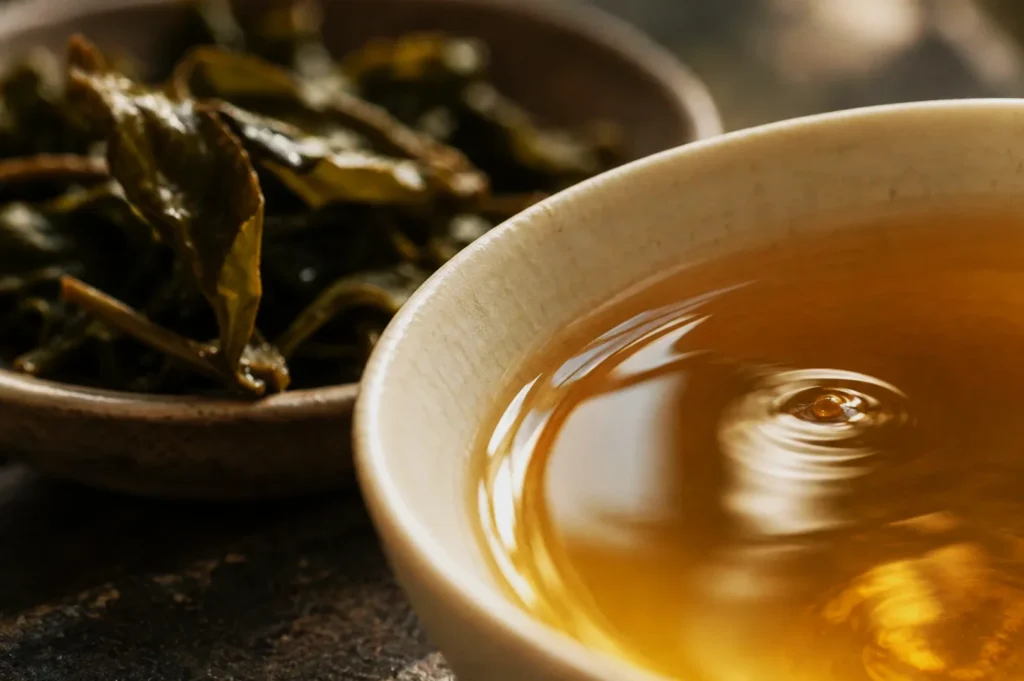
At a Chinese tea house in Singapore built around private tea appreciation, we often encourage guests to wait after swallowing.
With subtle tea, the finish may matter more than the first sip.
Is there returning sweetness?
Does the aroma remain?
Does the texture become rounder over successive cups?
These questions are especially useful for yellow tea.
Final Thought
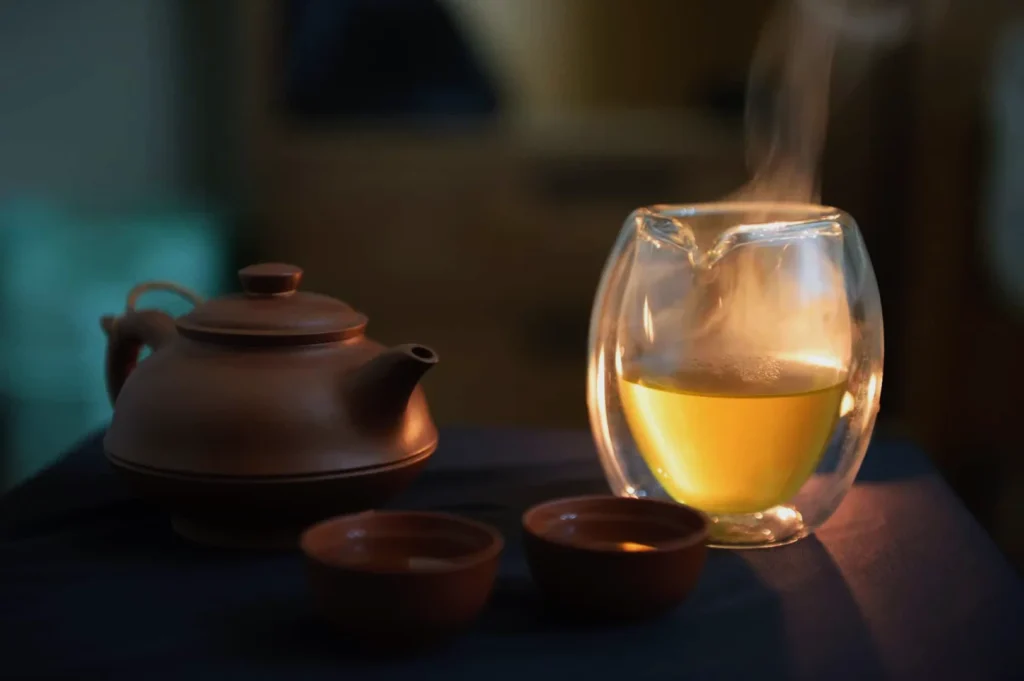
What does yellow tea taste like?
There is no single answer.
It can be floral, sweet, grain-like, chestnut-like, fresh or gently roasted.
The shared quality is often composure.
Yellow tea does not need to be loud to feel complete.